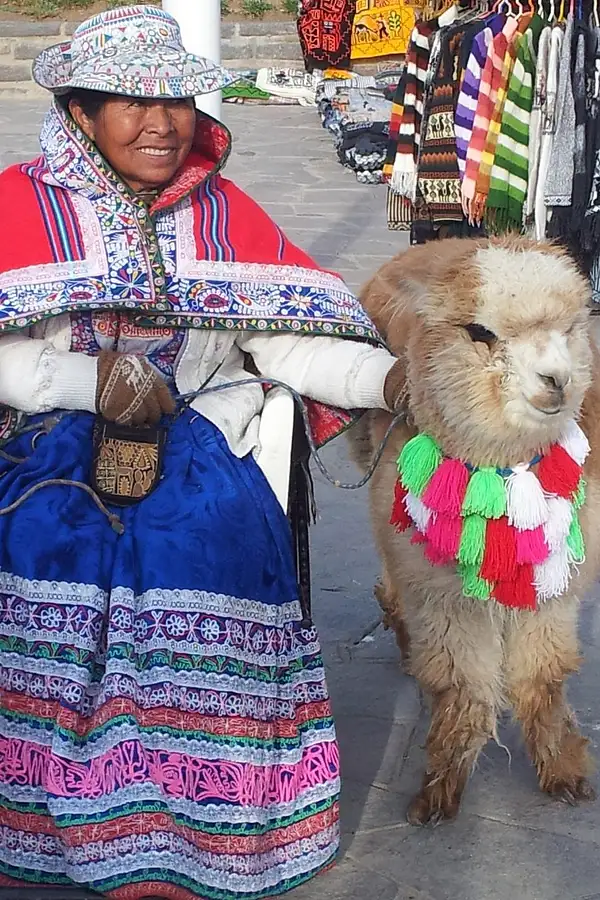
PERU – WOMEN’S HERITAGE IN THE ANDES
A JOURNEY THROUGH MEMORIES, LANDSCAPES, AND WOMEN-KEPT STORIES
This journey explores Peru through the stories of the women who live there, where past and present seamlessly intertwine. It offers the opportunity to experience the country’s heritage from a fresh perspective, to not only hear but truly feel the world around you, opening yourself to a genuine connection and new experiences. Along the way, iconic landscapes and sites—Machu Picchu, the Sacred Valley, and Lake Titicaca—unfold before you, at a pace that allows space for reflection. The mountains, stones, and waters hold stories, which the women living close to them give voice to. Our guides, artisans, farmers, and tradition-keepers open their worlds to you, sharing their knowledge, daily lives, and the inner strength that has shaped their communities across generations. Ancient rituals, textile traditions, and local flavors complete the experience. This journey is not just about discovery—it is about encounters: with landscapes, stories, and the defining female presence that plays a crucial role in Peru’s cultural heritage.
DETAILS
Travel
Travel to the destination is self-arranged and not included in the price, but from the moment you decide to join, we help you choose the gentlest way to reach your destination.
We calculate your footprint, explore flight-free possibilities, and guide you toward options that honor both your adventure and the Earth. Because the way you arrive is already part of the journey.
Price
3000 EUR
Deposit (40%) → €1,200 payable at registration
Second installment (60%) → €1,800 payable 60 days before departure
The participation fee includes a €50 donation, half of which goes to a local Peruvian women’s organization and the other half to a Hungarian women’s advocacy organization.
The airfare is not included in the participation fee.
Accommodation
All accommodations selected for the program follow sustainable operational principles.
The hotels are family-owned businesses or part of locally owned Peruvian hotel chains, supporting the local economy.
One night will be spent with an indigenous community on Amantaní Island on Lake Titicaca, providing direct insight into local lifestyles and traditions.
Date
Autumn departure: October 1–15, 2026
(14 days / 12 nights)
Available spots: 12/16
Spring departure: April 1–15, 2027
(14 days / 12 nights)
Available spots: 16/16
Maximum group size: 16 participants.
The trip will not take place with fewer than 8 participants; in such a case, the amount paid will be refunded or can be transferred to another trip according to the contract terms.
PLAN B. B as in Benevolent
1. nap – Megérkezés Limába – Az első lépések Peruban
Upon arrival at Jorge Chávez International Airport, we will be welcomed and transferred privately to our hotel in the Miraflores district of Lima.
The rest of the day is free to rest from the journey and gently tune into our shared Peruvian experience. Today’s Lima is a city of exciting contrasts, where past and present coexist naturally. Its rich architectural heritage, diverse society, and world-renowned gastronomy all reflect how layered and constantly evolving this unique capital truly is.
Day 2 – Women’s Roles and Symbols
- We start the day at the Museo Larco, a charming 18th-century building constructed atop an ancient pyramid. Its collection brings us closer to Peru’s pre-Columbian civilizations and helps us explore how Andean thought expressed the balance and complementary power of male and female roles. The erotic ceramics offer a unique and candid insight into daily life, fertility, and ritual practices.
- After lunch at the museum café, the tour continues in Lima’s historic center at the Santo Domingo Monastery, where the earthly remains of Saint Rose of Lima rest. Here, our reflections turn to the roles of women within colonial society, at the intersections of faith, social class, ethnicity, and power.
- As we walk through the historic streets, we gain insight into the lives of the tapadas limeñas—the veiled women of Lima between the 16th and 19th centuries—who wore the distinctive saya y manto. This attire, consisting of a form-fitting silk skirt (saya) and a silk cloak covering the head and face (manto), concealed almost the entire body, leaving only one eye visible.
- This fashion, influenced by Spanish and Moorish styles, not only created a striking appearance but also provided a certain degree of anonymity and freedom. Women could move more independently through the city and had greater social mobility in public life.
Day 3 - Arrival in Cusco - Into the Heart of the Inca Empire
- In the morning, we fly to Cusco. Upon arrival, our guide welcomes us to the former capital of the Inca Empire.
Cusco was considered the sacred center of the Andean world, the heart of the Tahuantinsuyo. In Quechua, Tawa (four) and suyu (region/territory) refer to the empire’s four main administrative divisions. The city’s layout expressed both cosmic order and political power. The ceremonial axis was formed by the Haucaypata (today’s Plaza de Armas) and the Coricancha Temple. - In Cusco, Inca stone walls and the colonial buildings constructed atop them create a unique harmony, making the layers of the past tangible—the marks of conquest, the act of rebuilding, and the continuation of traditions.
- The afternoon is reserved for acclimatization, which is especially important at this altitude (3,400 meters): gentle walks, coca tea, and rest are recommended.
Day 4 – In the Footsteps of Inca Queens and Heroines
Today we explore Cusco, the heart of the Inca Empire. Starting from the ruins of Sacsayhuamán, we walk down into the historic city center, retracing the layered history of the city along its main streets.
During the tour, we focus on the roles of women: the queens (Coyas), acllas, ñustas, and mamaconas, who held political, religious, and ceremonial duties, each with their own temples, resources, and spheres of influence. We also encounter legendary figures such as Mama Huaco, Chanan Kori Coca, and Mama Ocllo, whose strength and leadership left a lasting mark on the city’s history.
We visit the remains of the Acllawasi (“House of the Chosen”), the Coricancha Temple, and explore colonial-era sites that highlight Beatriz Clara Coya, a descendant of the royal Inca family, while witnessing the unique blend of Inca foundations and colonial architecture.
This walk is not just about history—it reveals the crucial and inspiring role women played in the Inca Empire, helping us see the past through a fresh perspective.
5th Day – The Sacred Valley of the Incas – Exploring Through Women’s Eyes
- The Sacred Valley of the Incas developed along the Vilcanota, the “Sacred River,” which flows toward the Amazon. In ancient times, this valley was an important agricultural center, and many products were distributed from here throughout the empire. That is why Pisaq and Ollantaytambo, two of the most significant Inca sites, are nestled within the surrounding mountains.
- We explore the valley, discovering these iconic sites, hidden corners, and small villages, while meeting local women artisans and entrepreneurs who share the Sacred Valley through the lens of their own lives.
- We head to Pisaq (2,970 m), a small town that has retained its traditional character, with narrow streets and historic houses. We visit an archaeological site in the town, then head to Ernestina’s, where we prepare and taste traditional empanadas (meat-filled pastries) made with local ingredients.
- Continuing along the Urubamba River, we pass small villages and cultivated fields. In Urco, we explore a modest archaeological site that offers insight into the Andean worldview and reverence for water.
- Later, at the Huayoccari vineyard (2,900 m), Carla guides us as we taste Wayocari wine and learn the secrets of high-altitude viticulture. From Yucay, we walk toward the Chichubamba community, passing strawberry and vegetable fields, and share a traditional lunch in the home of local women.
- Finally, we visit Mónica, who introduces us to the process of cocoa production, ending the day with a delicious cup of chocolate.
- At the end of the day, we arrive at our countryside hotel along the river, surrounded by mountains—a peaceful setting ideal for rest and rejuvenation.
Day 6 – Flavors, Colors, People – The Magic of the Market
- The market is not just a place to find a wide variety of exotic and colorful products; it is a whole world in itself, where information is exchanged, friendships are formed, and social connections are renewed. Traditionally, women have made the market a hub for trade, social life, and economic activity.
- After breakfast, we travel to the town of Calca to visit the traditional local market. Here, we find everything from fish, fruits, vegetables, and herbs to corn, clothing, and radios. While some products come from Lima, most are sourced from the surrounding countryside, including coffee from the cloud forests, coca leaves, cocoa, bananas, pineapple, and yuca.
- Our main focus, however, is meeting the people, especially the caseras, the women who bring the market to life. They nurture relationships with returning customers and warmly welcome visitors. We meet women like Sonia, Lourdes, and Juana, tasting tamales (steamed dishes wrapped in corn husks), seasonal fruits, fresh bread, olives, and nuts – a true celebration of personalities, colors, and flavors.
- Next, we travel to the nearby village of Lamay, where Marta reveals the secrets of making chicha, the traditional Inca drink. Chicha, an essential element of festivals and celebrations, remains a vital part of Andean ritual and social life.
- Later, we meet local housewives who share their knowledge of Andean cuisine, explaining how food connects with the seasons, agriculture, and traditional festivals.
- We begin by preparing a refreshing tumbo (passion fruit) drink or the classic pisco sour. We explore native ingredients such as root vegetables, beans, mote, and tarwi, then cook together a lahua corn soup, spiced sauces like uchucuta or llatan, and grill or roast chicken, fish, or meat to accompany the traditional mustard-based haucha stew. The meal concludes with a typical dessert from the Cusco region.
After lunch, we return to the hotel. The afternoon is free for relaxation or a leisurely walk.
Day 7 – Machu Picchu – The Jewel of the Andes
- In the morning, we travel by train to Machu Picchu, the jewel of the Andean world, hidden within the embrace of the cloud forest at the meeting point of the Andes and the Amazon.
- The city was built during the reign of Inca Pachacútec and is recognized as one of the New Seven Wonders of the Modern World. Research suggests that the citadel functioned as both a sacred and administrative center, closely connected to astronomical observations and the reverence of the surrounding mountains.
- Numerous female remains—likely those of priestesses—have also been found at the site, indicating that women played an important role here as well. The architecture, engineering, and symbolic layout of Machu Picchu continue to amaze visitors from all over the world.
- During a guided tour of approximately two and a half hours, we explore its most iconic temples, terraces, and viewpoints.
- Machu Picchu is both a Cultural and Natural World Heritage Site, and its preservation is a shared responsibility.
- After the visit, we return to Aguas Calientes for lunch, then take the train to Ollantaytambo, from where we continue to our hotel in the Sacred Valley.
Day 8 – The Female Power of the Andes – Rituals and Crafts
- In ancient Peru, many female deities were revered: Mama Sara, the goddess of maize; Mama Cocha, the goddess of the sea; Pachamama, Mother Earth; as well as various local female spirits. These deities were integrated into a complex dualistic system alongside complementary male forces. Mountains, lakes, and springs were all part of this worldview, where nature was considered alive and imbued with gendered qualities.
- Today, we visit a place where the feminine lunar cult still resonates: Killarumiyoq—“the place of the Moonstone”—a sanctuary dedicated to Mama Killa, the Moon Goddess and a symbol of fertility and agricultural cycles. This rarely visited site holds deep symbolism and a serene, refined beauty.
- Here, guided by an Andean priest, we take part in a ceremonial offering to Pachamama, expressing gratitude for all that this journey has given us so far.
- We then travel to the indigenous community of Humasbamba near Chinchero, close to Lake Piuray. The women of the community welcome us with a traditional pachamanca—an ancient cooking ritual connected to the worship of the earth and its bounty.
- We walk through the community, visit the old colonial square and, if accessible, a small chapel that reflects the early period of evangelization during colonial times.
- Virginia and the women of Humasbamba share their life stories with us while teaching traditional dyeing and weaving techniques. These practices have been passed down through generations and are preserved by women as a vital expression of cultural identity through textiles.
- In ancient Peru, textile art reached an exceptional level: it was not only an artistic and symbolic form of expression, but—according to research—also a kind of ideographic communication through a complex system of symbols that is still not fully understood today.
- Today, this heritage is kept alive by women in textile communities. Their art reflects the natural world, agriculture, celestial bodies, and supernatural beings, playing a key role in preserving a legacy that spans thousands of years.
Day 9 – Colors, Stories, and Sacred Places: A Journey into the Heart of the Andes
- Today, we leave the valleys of Cusco and head toward the high plateau, making our way to the city of Puno, located on the shores of Lake Titicaca—the mythical place of origin for the Incas and a sacred site for many other ancient Peruvian cultures.
- Our first stop is the small town of Checacupe (3,450 m), where we visit the Church of the Immaculate Conception, a lesser-known colonial gem. The church preserves baroque altarpieces and paintings from the Cusco School, offering key insights into the social, cultural, and political transformations of the Andes during the colonial period.
- In the town of Tinta, we pause to learn about the story of Túpac Amaru II and Micaela Bastidas, leaders of the largest indigenous uprising of the 18th century. Micaela Bastidas’ prominent role highlights the importance of women in resistance and political life in the Andes.
- Our next stop is Raqchi (3,550 m), home to the impressive Temple of Viracocha, dedicated to the principal creator god of the Inca world. We explore the archaeological complex at a relaxed pace, then visit Grivanesa’s home in the community for lunch, where local stories help keep the meaning of this sacred place alive.
- We continue toward La Raya (4,335 m), the highest point of our journey, offering breathtaking views of the Andean ranges. The landscape gradually shifts from the Cusco valleys to the high plains of Peru. We enter the region of Collasuyo, the ancient homeland of the Colla people, where the vibrant clothing of local women creates a striking contrast with the ochre and yellow tones of the land.
Day 10 – A Sea Trapped Among the Mountains: Journey to the Islands of Lake Titicaca
- High in the Andes lies Puno, serving as the gateway to Lake Titicaca—the highest navigable lake in the world.
- In the morning, we meet Judith, who will accompany us during the final stage of our journey. As a native of Amantaní Island, she shares personal stories that offer insight into the history and everyday life of this unique region.
- At an altitude of 3,965 meters, Lake Titicaca is often described as a piece of the sea trapped among the mountains. According to Inca mythology, this is where their civilization was born, and for centuries, the lake has been considered sacred by Andean peoples.
- From here, we continue to Amantaní Island, located about 40 kilometers from Puno (approximately a three-hour boat ride). The island’s 3,600 inhabitants, mostly of Quechua origin, primarily live from agriculture.
- Upon arrival, our host families welcome us, and we share lunch together.
- In the afternoon—if arranged in advance—we can take part in workshops organized by local women, such as cooking, music, weaving, or stone carving (optional and paid locally). There is also the opportunity to go out on the water in a traditional handmade boat (optional, at your own expense). We take a walk around the island, embracing its peaceful atmosphere, then hike up to the highest point to enjoy a beautiful sunset.
- After dinner, we join an intimate celebration with our hosts and guide.
- Overnight, we stay on Amantaní Island in local family homes. These accommodations are simple and provide basic comfort.
Day 11 – Across the Islands of Lake Titicaca: Textile Traditions, Sunrises, and Quiet Moments
- Early risers may wake at dawn to witness the sunrise over the lake. After a farewell breakfast with our host families, we depart at 8:00 AM for Taquile Island, about a 40-minute boat ride away. With around 1,200 inhabitants, Taquile is renowned for its rich textile traditions.
- Here, by the lakeshore in a peaceful setting, we hold a small closing ceremony—giving thanks for the journey and reflecting on the experiences, moments, and connections we have shared.
- Afterward, we return by boat to Puno, arriving in the late afternoon.
Day 12 – Return flight to Lima
Today we fly back to Lima, where we will spend one last evening together in Peru’s vibrant capital. There will be time for a leisurely walk, a farewell dinner, or simply reflecting quietly on everything we have experienced over the past days. The memories will slowly settle within us, bringing this wonderful journey to a fitting conclusion.
Day 13 – Farewell to Peru – Free Moments in Lima
- The morning is free: you can go shopping or enjoy some personal time.
- If desired, we can participate in a special optional workshop: “Altar for the Women of Our Ancestors,” where, through a short personal creative process, we pay tribute to the women in our family lineage.
- At the designated time, transfer to the airport for the flight home.
Utazási ajánlat tartalma
Price includes
- Accommodation in selected hotels (twin rooms with breakfast).
- Female, local guides for the group in Lima, Cusco, and Puno.
- All services and private transportation (except the train and bus to Machu Picchu).
- Meals indicated in the itinerary.
- Entrance fees to all listed archaeological sites, monuments, national parks, and museums (unless otherwise specified).
- Qualified local guides.
Price does not include
- Airfare
- Baggage fees
- Travel insurance
- Tips according to local customs, amounting to USD 100 per person. This will be given in cash to the drivers and local guides, collected at the beginning of the trip by the guide.
- Some dinners (where specifically indicated)
- Optional personal expenses
- Shopping, souvenirs, entrance feesSingle room supplement
Cancellation Policy
90 days: before the start of the trip: 50% of the paid amount will be refunded.
60 days: before: 30% of the paid amount will be refunded.
30 days: the paid amount is non-refundable, but the trip can be transferred to another person.
Are you ready for a
Fill out the form and sign up for our current offer!
Not a fan of forms? Just send us an email at:
hello@noplanetbtravelwithb.com